
Engage
Shape customer journeys
Connect communication channels and routing around the customer journey.
- Voice, email, chat, SMS, WhatsApp, and Microsoft Teams
- Queues, menus, and skills
- Inbound and outbound work
Partner platform
The CallCorp platform supports customer interactions, agent work, management visibility, and partner operations across referral and qualified white-label models.
Architecture
Build around your brand and customer relationship while clearly defining the operating responsibilities, platform capabilities, and infrastructure each opportunity requires.
Partner layer
Operating layer
Modular platform services
Deployment, data, and support details are validated for the customer environment before launch.
Platform foundation
Start with the customer workflow, then define how the partner and CallCorp share responsibility for supporting it.
Connect communication channels and routing around the customer journey.
Give teams a consistent place to handle customer interactions.
Use interaction context to support consistent quality and performance review.
Manage customer environments, platform configuration, and usage visibility.
Platform responsibility
Capabilities alone do not define the offer. Brand, customer relationship, deployment choices, and support responsibilities also need to be clear.
Partner controls
Joint decisions
Platform foundation
Define the requirement, owner, and evidence together
Product evidence
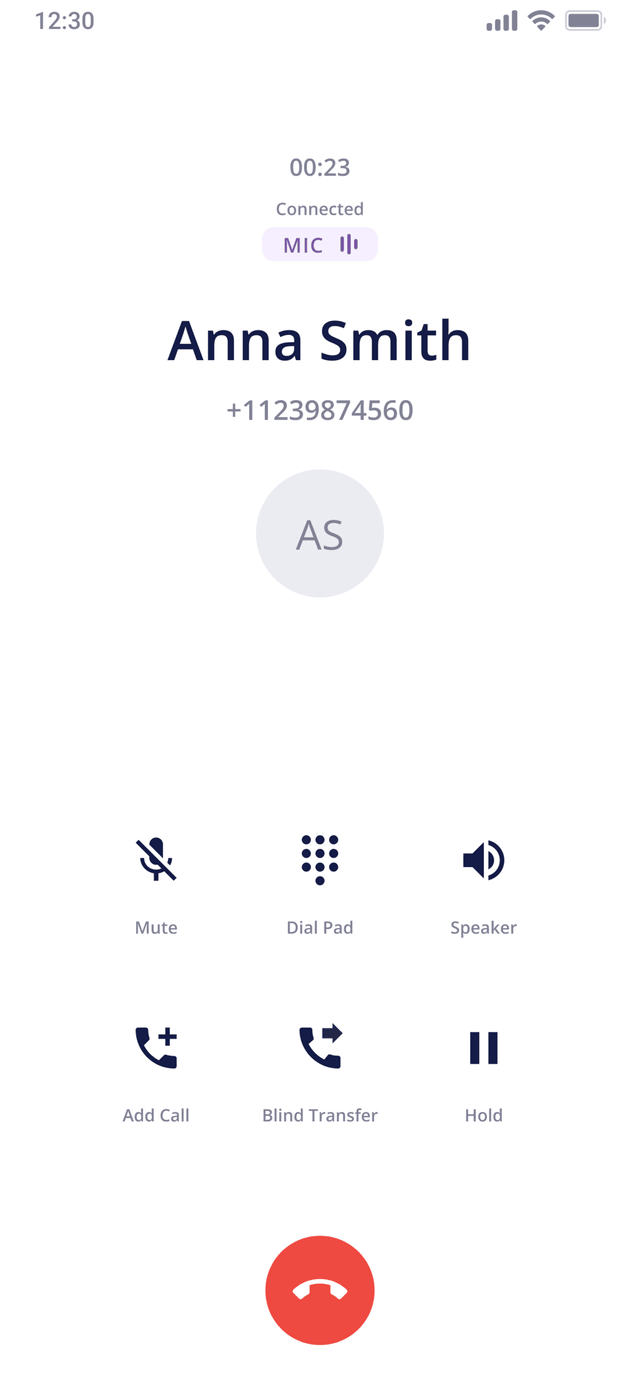
Use the product experience to test your customer workflow and validate the capabilities, configuration, and operating requirements you need.
17+ channels
Communication coverage in one agent experience
5,000+ API endpoints
Extensibility across platform workflows
14 partner reports
Usage and invoice-support detail by customer environment
Learn more about the CallCorp CCaaS platform, integrations, and deployment options.
A multi-tenant CCaaS platform allows service providers to manage multiple customer contact center environments from a shared platform while maintaining separate configurations, users, workflows, and services for each customer.
For MSPs, resellers, telcos, and other service providers, multi-tenancy makes it possible to scale a contact center offering without deploying and managing a separate technology stack for every customer. Key capabilities include:
Customer separation: Maintain distinct customer environments, configurations, and access controls.
Centralized management: Manage multiple customer environments through a common administrative structure.
Flexible configuration: Configure capabilities and workflows based on individual customer requirements.
Usage visibility: Monitor activity and usage across customer environments.
Scalable operations: Add customers and services without rebuilding the underlying platform.
CallCorp organizes its platform around separate customer environments, configuration, usage visibility, identity, telephony, data, and integrations. Its architecture also separates partner-controlled decisions, joint deployment decisions, and underlying platform responsibilities.
A traditional CCaaS platform is typically sold under the technology provider's brand, while a white-label CCaaS platform allows a service provider to deliver contact center capabilities under its own brand while maintaining ownership of the customer relationship. For MSPs, resellers, telcos, and other service providers, the distinction affects more than branding:
Brand control: White-label partners can take their own contact center offering to market rather than reselling a vendor-branded product.
Customer relationship: Partners can own the sales and account relationship with their end customers.
Packaging and positioning: Partners determine how contact center capabilities are packaged and positioned alongside their existing services.
Technology configuration: A white-label platform can provide flexibility to configure capabilities, integrations, and customer environments around the partner's operating model.
Commercial control: Depending on the partner agreement, white-label providers can have greater control over pricing and the services bundled around the platform.
The CallCorp architecture is explicitly designed around partner control of the brand, package, and customer relationship, with configurable operating and platform layers underneath.
Service providers evaluating a white-label CCaaS platform should look beyond contact center features and evaluate how much control the platform gives them over their brand, customer relationships, technology, pricing, integrations, and ongoing operations. Key evaluation criteria include:
Brand control: Deliver the solution under the service provider's own brand.
Customer ownership: Control the sales, account, and ongoing customer relationship.
Multi-tenant architecture: Manage multiple customer environments efficiently.
Platform flexibility: Adapt the platform to different customer requirements.
Integration and API access: Connect CRM, business applications, communications, and data.
Infrastructure flexibility: Choose from options for cloud, carrier, storage, database, and other underlying services.
Commercial flexibility: Control packaging, pricing, and value-added services.
The CallCorp CCaaS platform explicitly separates the partner layer, operating layer, and underlying platform services, giving partners control over brand, packaging, and customer relationships.
A CCaaS platform should integrate with CRM, ticketing, workforce management, data, and other business systems so agents can access customer context and complete workflows without moving between disconnected applications. When evaluating CCaaS integration capabilities, organizations should consider:
APIs: How the platform exposes APIs for extending and integrating contact center workflows.
CRM integration: How customer records and interaction history connect to agent workflows.
Business system integration: How ERP, EHR, ticketing, and other business systems connect customer data, business processes, and agent workflows.
Data movement: How information moves between the contact center and other systems.
Authentication and access: How identities and permissions are managed across systems.
Workflow flexibility: How integrations support customer-specific business processes.
CallCorp provides more than 5,000 API endpoints for extending platform workflows, giving partners flexibility to connect contact center capabilities with CRM, data, communications, and other business systems.
Some CCaaS platforms allow service providers to control or select portions of the infrastructure supporting their contact center offering, while others require customers and partners to use the vendor's predefined technology stack. For service providers, infrastructure flexibility can provide greater control over how services are deployed, integrated, and managed. Important considerations include:
Cloud hosting and tenancy: Define where and how customer environments are hosted.
Telecommunications services and carriers: Select the telecommunications services and carriers that support customer interactions.
Databases and storage: Define how customer data is stored and managed.
Data ownership and movement: Establish who controls customer data and how it moves between systems.
AI providers: Select the AI providers and technologies used within customer environments.
Customer-specific deployment requirements: Adapt infrastructure to individual customer needs.
The CallCorp platform supports a bring-your-own (BYO) approach that includes AI vendors alongside database, storage, and carrier choices, giving partners greater flexibility to build around their preferred technology stack and customer requirements.
An AI-ready CCaaS platform should give service providers flexibility in how AI is integrated into customer interactions, agent workflows, routing, automation, analytics, and other contact center processes. Rather than evaluating AI based only on individual features, service providers should consider:
AI flexibility: Support native, third-party, or partner-selected AI technologies.
Integration: Connect AI with routing, customer data, agent workflows, and business applications.
Data access: Understand what information AI applications can securely access and where that data resides.
Provider choice: Select AI technologies without being locked into the CCaaS vendor's AI ecosystem.
Future adaptability: Incorporate new AI capabilities as technologies and customer requirements evolve.
AI architecture is an important consideration when evaluating CCaaS platforms. The CallCorp platform supports a bring-your-own (BYO) approach that includes AI vendors alongside database, storage, and carrier choices.
Data security and data sovereignty are important considerations when choosing a CCaaS platform, especially for organizations with regulatory, privacy, or geographic requirements. Businesses should understand how customer data is protected, where it is stored, who controls access, and what deployment options are available.
CallCorp supports configurable deployment models, including customer-owned AWS or Azure environments and options for customer-controlled database and storage technologies. Deployment, data, security, and support requirements should be reviewed for each customer environment before launch.
For MSPs, resellers, and service providers, a modern CCaaS platform should support the communication channels their customers use while enabling agents to manage those interactions through coordinated routing and workflows. Common channels include:
Voice
Web chat
SMS/text messaging
Messaging applications such as WhatsApp
Collaboration platforms such as Microsoft Teams
The goal of omnichannel CCaaS is not simply to offer more channels. It is to connect those channels with routing, customer context, agent workflows, and reporting so interactions can be managed consistently across the customer journey.
CallCorp supports 17+ communication channels within one agent experience, including voice, email, chat, SMS, WhatsApp, and Microsoft Teams, helping partners support diverse customer communication requirements through a unified contact center environment.
MSPs and resellers should evaluate a CCaaS platform based on the customer experience it must support, the technology required to deliver it, and the responsibilities the partner intends to take on. A technical evaluation should include:
Customer journey: Map the interactions and use cases the platform must support.
Channels and routing: Identify required communication channels, queues, skills, IVR, and routing logic.
Agent workflows: Determine how agents access customer context and complete work.
Integrations: Identify CRM, data, communications, and other required systems.
Infrastructure: Define cloud, carrier, storage, database, and deployment requirements.
Security: Document data, authentication, access, privacy, and compliance requirements.
Operating model: Establish who owns implementation, pricing, packaging, configuration, support, billing, and ongoing customer management.
Proof: Test critical workflows and integrations before defining the final commercial and operating model.
The CallCorp technical-evaluation framework starts with the customer journey and helps partners validate the technical, operating, and support requirements before defining the final solution.
Work with a partner strategist to map the platform to your offering, customer relationships, and operating responsibilities.